
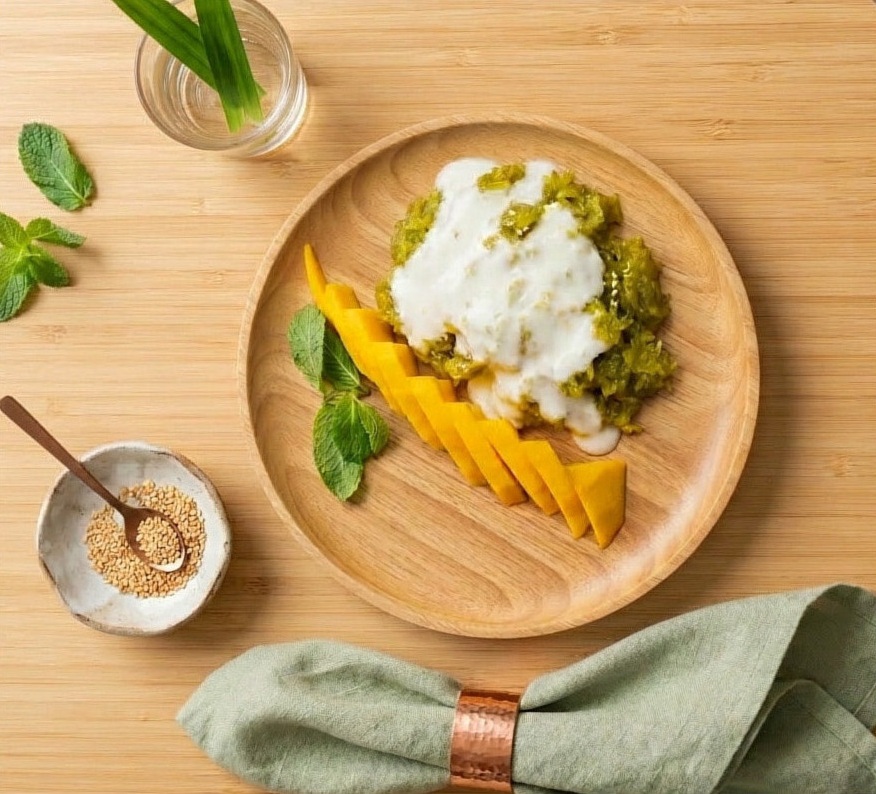
You just finished a plate of Pad Kee Mao or a bowl of Tom Yum so good you scraped the bowl. What comes next? For most of our regulars in San Jose and Hayward, there’s only one answer: mango sticky rice. It’s the single most-ordered dessert on our menu, and one of the most Googled Thai food questions out there. So here’s everything worth knowing about it: where it came from, what it’s supposed to taste like, and where to get it done right near you.
Where Did Mango Sticky Rice Actually Come From?
Mango sticky rice, or khao niew mamuang, isn’t a modern dessert invented for Instagram. It goes back centuries in Thai and Laotian food culture, from a time when glutinous rice and mangoes were both harvested in the same season in Southeast Asia. Because both ingredients ripened together, pairing them became a natural seasonal tradition, especially during Thailand’s hot mango season between April and June. Over time it moved from a seasonal treat to a year-round staple on Thai menus everywhere, including ours.
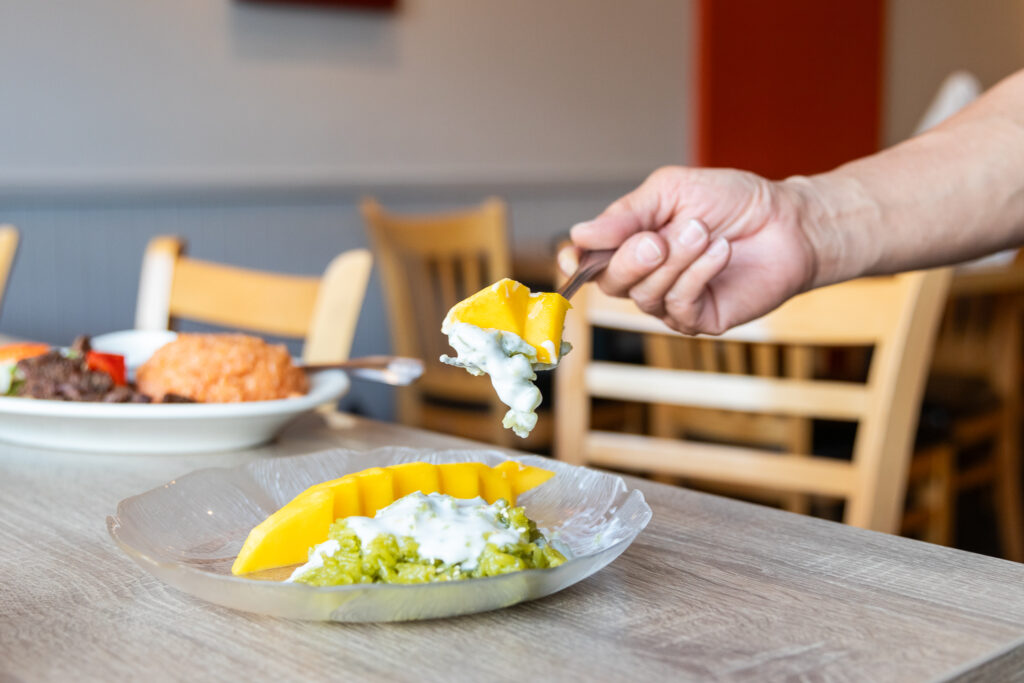
What Is Mango Sticky Rice, Exactly?
At its core, it’s three components working together:
- Glutinous (sticky) rice, steamed, then soaked in sweetened coconut milk
- Ripe mango, sliced fresh
- Warm coconut sauce, poured over the top right before serving
At Red Chili, we put our own spin on it with Green Tea Sticky Rice with Mango, blending the traditional dessert with a subtle green tea note for a lighter, more fragrant finish. You’ll find it on the full menu at both our San Jose and Hayward locations.
Is Mango Sticky Rice Served Hot or Cold?
Neither, really, and that’s the point. The sticky rice is served warm (or close to room temperature), while the mango on top is served cold and fresh. That contrast, warm, chewy rice against cold, juicy mango, is what makes the dish work. Serve it fully hot or fully cold and you lose the entire effect.
What Does It Taste Like?
If you haven’t tried it, picture something between rice pudding and a tropical fruit dessert:
- Sweet, from the ripe mango and sugar in the coconut sauce
- Creamy, from coconut milk soaked deep into the rice
- Slightly salty: most traditional recipes add a pinch of salt to the coconut sauce specifically to balance the sweetness
- Chewy: glutinous rice has a completely different texture from regular steamed rice, almost dumpling-like
That pinch of salt trips people up the most, but it’s intentional. Without it, the dish would taste flat and one-note sweet instead of balanced.
Is Mango Sticky Rice Healthy?
It’s not a “health food,” but it’s lighter than most Western desserts. It’s naturally gluten-free, made from simple whole ingredients (rice, mango, coconut milk, sugar, salt), and doesn’t rely on butter, flour, or dairy the way cake or ice cream does. If you’re looking for a dessert that won’t sit heavy after a full Thai dinner, this is about as good as it gets.
What Pairs Well With Mango Sticky Rice?
Since it’s rich and coconut-forward, it works best after dishes with a bit of heat or acidity to contrast it, which is exactly why it’s such a popular closer after our Panang Curry, Tom Yum Soup, or Pad Kee Mao. The sweetness resets your palate after spice in a way that a heavier dessert can’t.
Where to Get the Best Mango Sticky Rice in San Jose & Hayward
If you’re searching for mango sticky rice near you in the Bay Area, our Green Tea Sticky Rice with Mango is one of the most-ordered items on the menu at Red Chili, and it travels well for groups too. Planning a party or office event? It’s an easy add to a catering order alongside our curries and noodle dishes.
San Jose: 2538 Berryessa Rd, San Jose, CA 95132, (408) 937-8888 Open daily, 11:00 AM to 2:30 PM and 4:00 PM to 8:30 PM
Hayward: Temporarily closed for repairs following damage from a neighboring fire. Follow updates on Instagram @redchili.bayarea or check our locations and hours page for the latest.
Want to know more about the family behind the recipe? Read our story here.
Quick FAQ
Yes, slightly. A pinch of salt in the coconut sauce is traditional and balances the sweetness.
It’s a dessert, traditionally served at the end of a Thai meal, similar to how tiramisu closes out an Italian dinner.
Traditionally yes. Rice, mango, coconut milk, sugar, and salt contain no animal products, though it’s always worth confirming with the restaurant.
Yes, it’s a popular addition to group and catering orders at Red Chili.