
Quick Answer:
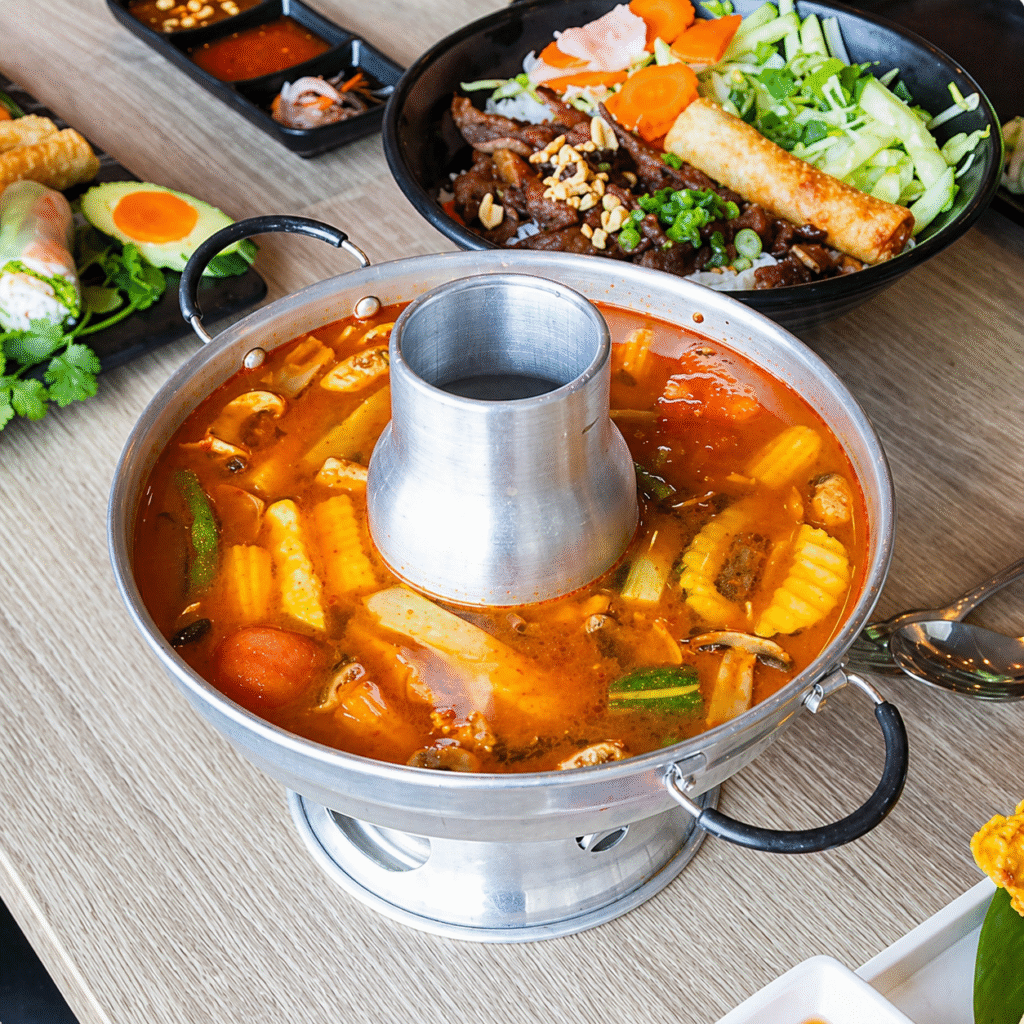
Tom Yum soup is one of the most well-known dishes in Thai cuisine, recognized for its bold spicy, sour, and aromatic flavor. It’s built around fresh Thai herbs like lemongrass and lime, which give the broth its signature bright taste. Depending on the recipe, Tom Yum can include shrimp, chicken, seafood, mushrooms, or vegetables. The exact flavor and spice level can vary from one kitchen to the next, but the sour-spicy balance is always at the heart of it.
What Is Tom Yum Soup?
Tom Yum is a Thai soup that has become one of the country’s most recognizable culinary exports. Unlike a curry, which usually relies on a thick, coconut-based sauce, Tom Yum is built on a light, herbal broth. That broth is what gives it a completely different eating experience.
The name itself offers a small clue to what’s inside the bowl. “Tom” refers to the boiling process used to make the broth, while “Yum” points to the spicy and sour flavor style common in Thai cooking. Together, they describe a soup that’s simmered with aromatics and finished with a sharp, tangy kick.
Most versions include a combination of lemongrass, lime, chili, and other Thai herbs, along with a protein or vegetable base. Shrimp is a popular choice, but chicken, mixed seafood, mushrooms, and vegetable-only versions are all common too. This flexibility is part of why Tom Yum shows up on so many Thai restaurant menus and why it’s become a favorite for people looking for Thai comfort food with a little heat.
What Does Tom Yum Soup Taste Like?
Tom Yum is known for hitting several flavors at once. It’s sour, spicy, salty, and savory, all wrapped in an aromatic broth that smells as good as it tastes.
The sourness usually comes through first, followed by a building heat from chili. Underneath that is a savory depth, often from fish sauce, and a fresh, almost citrusy aroma from the herbs used in the broth. None of these flavors are meant to sit alone. They work together, with the sour and spicy notes balancing each other so the soup doesn’t feel one-dimensional.
That said, no two bowls of Tom Yum taste the same. Restaurants vary in how sour, spicy, sweet, or rich they make their broth, so what you taste at one Thai restaurant may be noticeably different at another.
What Makes Tom Yum Soup Sour?
The sour flavor in Tom Yum soup mainly comes from lime juice. Fresh lime is typically added toward the end of cooking, which helps the broth keep a bright, clean sourness instead of a cooked-down, muted one.
Lemongrass and other Thai herbs and aromatics also play a role, though more in aroma and complexity than in straight sourness. Lemongrass adds a citrus-like fragrance that works alongside the lime, while other aromatics round out the broth’s overall character.
This sour element isn’t just there for flavor variety. It’s a key part of the balance that defines Tom Yum. Without it, the soup would lean too heavily on spice and salt, losing the brightness that makes it feel light despite its bold flavor.
Is Tom Yum Soup Really Spicy?
Tom Yum is traditionally known for having a spicy kick, and chili is usually the main source of that heat. In many versions, you’ll find fresh or dried chilies simmered right into the broth, sometimes along with chili paste for extra depth.
That said, “spicy” doesn’t mean the same thing in every bowl. Spice level can vary quite a bit between recipes and restaurants, and even between different cooks at the same restaurant. Some versions are noticeably hot, while others are milder and let the sour and savory flavors take the lead.
If you’re not sure how spicy a restaurant’s Tom Yum is, it’s worth asking before you order. Many Thai restaurants are happy to adjust the heat level or let you know what to expect.
What Ingredients Give Tom Yum Its Signature Flavor?
Several ingredients typically come together to build Tom Yum’s flavor profile. Recipes can vary by region, restaurant, and personal style, so not every bowl will include the same list, but these are commonly used:
- Lemongrass – adds a citrusy, aromatic quality to the broth.
- Lime or lime juice – provides the sharp sourness that defines the soup.
- Chili – responsible for most of the heat, whether fresh, dried, or in paste form.
- Galangal – a root similar to ginger, often used for a peppery, earthy note.
- Kaffir lime leaves – used in many recipes to add a distinct citrus aroma.
- Fish sauce – brings salty, savory depth to balance the sour and spicy elements.
- Mushrooms – a common addition, especially straw mushrooms, for texture and earthiness.
- Shrimp or other proteins – shrimp is popular, but chicken, seafood, or vegetables are also widely used.
Because Tom Yum recipes vary so much, it’s more accurate to say these ingredients are commonly used or often included rather than assuming every restaurant follows one exact formula.
What Is the Difference Between Tom Yum Soup and Hot and Sour Soup?
Tom Yum soup and hot and sour soup are sometimes compared because both are spicy, sour, and served hot. But they come from different culinary traditions and use different ingredients to get there.
| Feature | Tom Yum Soup | Hot and Sour Soup |
| Cuisine | Thai | Chinese |
| Main flavor profile | Spicy, sour, aromatic | Hot, sour, savory |
| Common aromatics | Lemongrass, galangal, lime leaves | Ginger, pepper, vinegar |
| Common proteins | Shrimp, chicken, seafood | Pork, chicken, tofu, or other proteins |
| Sour flavor | Often citrus-based | Often vinegar-based |
| Spice | Commonly comes from chili | Often comes from white or black pepper |
| Overall character | Bright and herbal | Rich, savory, and tangy |
Both soups can be spicy and sour, but the ingredients, aromatics, and culinary traditions behind them are quite different. Tom Yum leans on citrus and Thai herbs for its brightness, while hot and sour soup usually gets its tang from vinegar and its heat from pepper. Neither style is better than the other. They’re simply different approaches to a similar idea.
What Are the Most Common Types of Tom Yum Soup?
Tom Yum comes in several variations, and the name or style can shift depending on the restaurant.
- Tom Yum Goong – made with shrimp, one of the most widely recognized versions.
- Tom Yum with chicken – a milder, widely available option.
- Tom Yum seafood – often includes a mix of shrimp, squid, or fish.
- Tom Yum with mushrooms or vegetables – a good option for those who prefer a lighter or meat-free bowl.
- Clear Tom Yum – a lighter broth without added cream or milk.
- Creamier Tom Yum variations – sometimes made richer with coconut milk or evaporated milk.
Recipes and naming can vary by restaurant, so it’s worth asking what style a particular Thai restaurant serves if you have a preference.
Is Tom Yum Soup Always Clear?
Not always. Tom Yum can come in different styles depending on how it’s prepared.
Some versions have a clear, light broth that lets the sour and spicy flavors stand out on their own. Others are richer and creamier, often made with the addition of coconut milk or a similar ingredient, which gives the soup a fuller body and a slightly different taste.
Because of this, two restaurants can both serve “Tom Yum” and have bowls that look quite different from each other while still being true to the dish. The clear version tends to feel lighter, while the creamier version feels heartier and a bit more indulgent.
Why Is Tom Yum Considered Thai Comfort Food?
Tom Yum has earned its place as a comfort food for a lot of straightforward reasons. It’s served hot, which makes it satisfying on a cold day or when you’re simply craving something warm. The aroma alone, with lemongrass and lime hitting you before the first spoonful, adds to the experience.
The bold combination of spicy and sour flavors also gives it a wake-up-your-senses quality that a lot of people find comforting in its own way. Fresh herbs keep the broth feeling light rather than heavy, and the overall balance between heat, sourness, and savory depth makes it a dish people come back to again and again.
It’s worth noting that comfort here is about the eating experience, the warmth, the aroma, and the flavor balance, rather than any specific health claim.
How Should You Choose Tom Yum Soup at a Thai Restaurant?
If you’re ordering Tom Yum for the first time, or just want to make sure you get a bowl you’ll enjoy, a few simple questions can help.
Start with protein. Shrimp, chicken, seafood, mushroom, and vegetable versions are all common, so pick whichever fits your taste. If you’re sensitive to spice, ask about the heat level before ordering. It’s also a good idea to check ingredients if you have food allergies, since fish sauce and shellfish are common in many recipes. Some restaurants offer both a clear and a creamier style, so ask if you have a preference. Finally, think about whether you lean toward stronger sour, spicy, or savory flavors, since that can help guide which version or add-ons might suit you best.
Tom Yum Ordering Checklist
- Choose your preferred protein
- Ask about the spice level
- Check ingredients if you have food allergies
- Decide between clear or richer styles if available
- Consider a side of rice or another Thai dish
- Ask the restaurant about customization options
Quick Facts About Tom Yum Soup
- It is a Thai soup known for its spicy and sour flavor.
- Lime is the main contributor to its bright, sour taste.
- Lemongrass and other herbs give it a distinctive aroma.
- Shrimp is common in many versions, but chicken, seafood, mushrooms, and vegetables are also widely used.
- Spice and richness levels can vary a lot between recipes and restaurants.
Why Tom Yum Is Different From Other Asian Soups
A lot of soups across Asian cuisines use sour or spicy elements, but Tom Yum stands out because of its specific combination of Thai herbs, citrus, chili, and savory seasoning simmered into one aromatic broth. That mix of lemongrass, lime, and galangal isn’t something you’ll find in most other soup traditions, which is part of why Tom Yum has such a distinct identity even among other bold, flavorful soups.
Why Try Tom Yum Soup at Red Chili Thai & Vietnamese?
If you’re in the mood for Tom Yum, Red Chili Thai & Vietnamese offers Thai and Vietnamese dishes prepared with fresh ingredients, including flavorful Thai soups on the menu. Whether you’re craving something spicy and sour or want to explore other Thai comfort food options, the San Jose menu offers a range of dishes worth trying alongside Tom Yum, including curries, noodle dishes, and Vietnamese specialties like grilled pork vermicelli.
Red Chili serves the Bay Area, with a San Jose location currently open for dine-in and takeout. You can check locations and hours for both restaurants, browse the Hayward menu for when that location reopens, or place an order online to enjoy Tom Yum today. Planning a bigger event? Red Chili also offers a full catering menu for parties and gatherings of all sizes.
Frequently Asked Questions About Tom Yum Soup
Tom Yum is a Thai soup known for its spicy, sour, and aromatic flavor. It’s typically made with a broth flavored by lemongrass, lime, and chili, and can include shrimp, chicken, seafood, mushrooms, or vegetables depending on the recipe.
The sourness comes mainly from fresh lime juice, while lemongrass and other Thai herbs add aroma and complexity, rounding out the flavor.
Tom Yum is a Thai soup that gets its sourness mainly from lime and its aroma from herbs like lemongrass and galangal. Hot and sour soup is a Chinese dish that typically uses vinegar for sourness and pepper for heat. Both are spicy and sour, but they come from different culinary traditions.
Tom Yum is traditionally spicy, with chili as the main source of heat. However, spice levels can vary a lot between recipes and restaurants, so it’s worth asking before you order if you’re sensitive to heat.
It’s typically sour, spicy, salty, and savory all at once, with an aromatic quality from herbs like lemongrass and lime leaves.
Common ingredients include lemongrass, lime, chili, galangal, fish sauce, mushrooms, and a protein like shrimp or chicken, though this can vary by recipe.
Shrimp is a popular choice, especially in Tom Yum Goong, but the soup is also commonly made with chicken, seafood, mushrooms, or vegetables.
Yes. Chicken, mushroom, and vegetable versions are widely available for those who prefer to skip seafood.
No. Some versions have a clear, light broth, while others are creamier, often with coconut milk added for a richer texture.
Tom Yum is often paired with steamed rice or enjoyed alongside other Thai dishes as part of a larger meal.
Final Thoughts
Tom Yum soup is a Thai classic built around a simple but powerful idea: balancing sour, spicy, and savory flavors in one aromatic broth. Lime brings the sourness, chili brings the heat, and herbs like lemongrass and galangal tie everything together with a fragrance that’s hard to mistake for anything else. While it shares some similarities with hot and sour soup, its Thai herbs and citrus-forward flavor set it apart, and its spice level can range from mild to bold depending on where you order it.
Whether you’re new to Tom Yum or already know it’s your go-to order, it remains one of the most satisfying ways to experience Thai comfort food. If you’re in the Bay Area and want to try it for yourself, check out the Thai menu at Red Chili Thai & Vietnamese or place an order to enjoy a warm, flavorful bowl today.